
Summary
Long-distance caregiving for aging parents requires intentional planning, but technology and community support can make it significantly more manageable. This guide explores practical strategies for staying connected, organized, and involved in your parent's care from afar.
- Build a reliable local support network of neighbors, friends, or a senior community where staff members can provide regular check-ins and oversight
- Use technology consistently—video calls, shared calendars, smart home devices, and group texts—to stay genuinely connected between visits
- Establish a centralized system for important documents, contacts, and account information so you're prepared for any situation
- Plan visits strategically to accomplish tasks difficult to handle remotely, like home maintenance reviews and important conversations
- Recognize warning signs that your parent may need additional support nearby, such as difficulty maintaining the home or decreased social engagement
When your parent lives hundreds of miles away, staying on top of their day-to-day life can feel like a second job on top of your own. Long distance caregiving for aging parents comes with a specific set of hurdles. You can't just stop by to check on things, and a lot of what you'd normally handle in person now has to happen over the phone or through someone else's eyes.
The good news: caring for parents from another state has gotten a lot more manageable. Between technology, local resources, and communities built around connection and support, you have more ways than ever to stay involved without needing to be there every single day.
Building a Support Network Close to Home
A reliable local network is the foundation of any remote caregiving strategy. Start by identifying who's nearby: neighbors, friends, or relatives who can act as your eyes and ears and let you know if something seems off.
From there, look into local resources that can fill in the gaps:
- Neighbors or friends willing to check in on a regular basis
- Local community groups or senior centers your parent already enjoys
- Communities that combine social connection with optional support close by
Many families find that a community setting solves this problem on its own. When your parent is surrounded by neighbors, staff, and a full activities calendar, there are simply more people keeping an eye on how they're doing, which takes some of the pressure off you.
Remote Caregiving Strategies: Using Technology to Stay Connected
Technology closes a lot of the distance between you and your parent. Regular video calls let you see how your parent is really doing, not just hear it in their voice, so it's worth setting up a schedule that works for both of you.
A few tools worth considering:
- Video calling on a consistent schedule, not just when something comes up
- Shared calendar apps to track appointments, visits, and important dates
- Smart home devices, like doorbell cameras or motion-activated lighting, for everyday peace of mind
- Group texts or a shared photo app so siblings and relatives stay in the loop together
None of this replaces being there in person, but it does help you stay genuinely connected day to day.
Staying Organized When You're Coordinating Parent Care From Afar
Coordinating parent care from afar is mostly a logistics problem, and logistics get easier with a system. Keep one central file (digital or physical) with the basics: important contacts, account numbers, insurance information, and a copy of any documents you might need in a hurry.
It also helps to:
- Ask to be listed as an authorized contact wherever it makes sense
- Keep a shared, up-to-date list of who to call for what
- Set a recurring reminder to review paperwork every few months, not just when there's a crisis
Getting this in place early means you're not scrambling to find information when you actually need it.
Making Visits Count
When you can get to town, a little planning goes a long way. Use the trip to knock out things that are hard to do remotely:
- Walk through the home and note anything that could use a fix or an upgrade
- Sort through mail and paperwork that's piled up
- Meet the neighbors or friends who've been keeping an eye out
- Spend unhurried time together, not just running errands
A well-planned visit accomplishes twice as much as one spent playing catch-up the whole time.
Long Distance Caregiver Challenges: Signs Distance Is Becoming Harder to Manage
Even with a solid system, long-distance caregiver challenges tend to show up gradually. A few signs it might be time to look into more support nearby:
- The home is harder to keep up with than it used to be
- Your parent seems less social or mentions fewer outings with friends
- Calls are shorter or less frequent than they used to be
- Everyday tasks, like meals or errands, seem to be piling up
None of these mean something is wrong. They usually just mean it's a good time to look at options that bring more support closer to home, without asking your parent to give up their independence.
How Independent Living with supportive services** Can Ease the Load
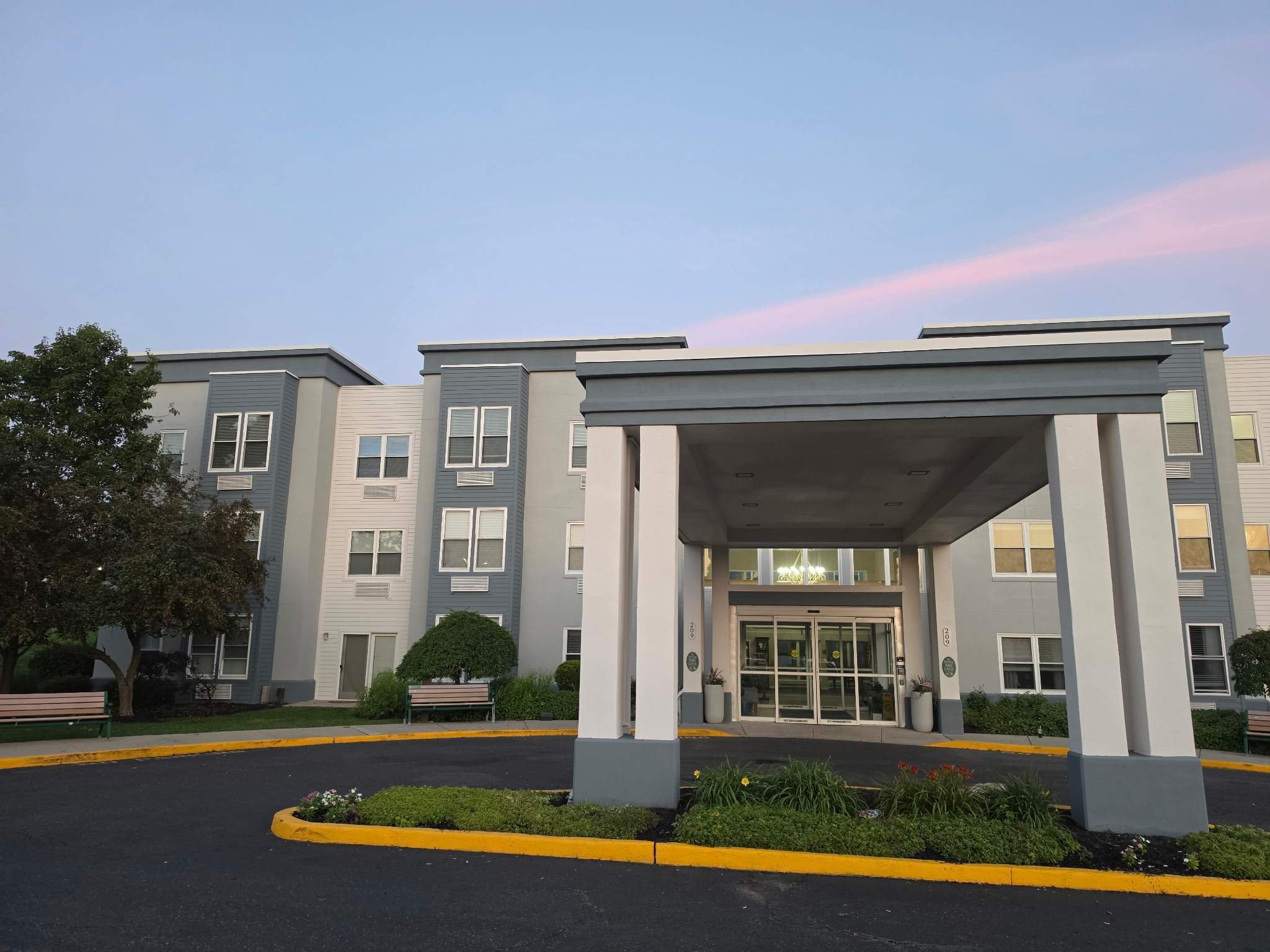
This is exactly the gap that Seaton Voorhees was built to fill. Located just steps from Voorhees Town Center, our Independent Living with supportive services** community is designed to support your parent's independence while offering access to additional help, only when and if they want it. A choice of third-party providers, including Personalized Home Health, Onsite Therapies, and Visiting Podiatrist services, is available onsite for convenience, so your parent can add support as needs change without leaving home or losing their routine.
Day to day, that routine looks like three chef-prepared meals served daily through our Sensations Dining program, a full calendar of Celebrations Activities & Events, and Dimensions Health & Fitness classes for residents who want to stay active. Residents also enjoy a professional salon and barbershop, a community garden and courtyard for quiet mornings, and scheduled transportation through our Connections program for errands and appointments around Voorhees. Suites and one- and two-bedroom apartment homes come maintenance-free, so there's no lawn to mow or gutters to clear.
For families managing senior care remotely, the combination of chef-prepared dining, a packed activities calendar, and optional supportive services right on site often means fewer worries about what's happening when you're not there.
Taking Time for Yourself While You Support Your Parent
Long-distance family support takes a real toll, even when things are going smoothly. Guilt about not being nearby, paired with constant background worry, adds up fast. You can't keep showing up for your parent if you're running on empty yourself.
A few ways to protect your own bandwidth:
- Set clear boundaries around what you can and can't do from a distance
- Split responsibilities with siblings or other relatives where possible
- Connect with others going through the same thing, whether that's a local group or an online community
- Remind yourself that recognizing your limits isn't a failure. It's part of doing this well
Long Distance Caregiving FAQs
How often should I visit if I'm caring for a parent from another state? There's no single right answer. Many families aim for a visit every few months, with more frequent calls and check-ins in between, then adjust based on how things are going.
What's the first step in managing senior care remotely? Start with a local support network: neighbors, friends, or a community that can act as your eyes and ears when you can't be there in person.
Is Independent Living with supportive services** the same as needing a lot of hands-on help? No. It's for residents who are largely independent but want the option to add third-party support, like therapies or non-medical home care, only if and when they choose to.
If long-distance caregiving has you looking for a community that keeps your parent connected, supported, and close to everything Voorhees has to offer, schedule a tour today and see Seaton Voorhees for yourself.
A choice of third-party providers is available onsite for convenience, but residents are under no obligation to use any particular one.